
Termites and timber
Termite ControlInspections, baiting and barriersBiting pests
Bed Bug TreatmentStaged treatment with follow upRodents and wildlife
Rodent ControlRats and mice, found and sealed outPossum RemovalBrushtail and ringtail, roof proofingFabric and pantry pests
Crawling insects
Ant ControlNests treated, not just trailsSpider ControlRedbacks, huntsman, white tailsCockroach ControlGerman, American, OrientalFlies and hygiene
Stinging insects
Home and business
Termites and timber
Termite ControlRodents and wildlife
Rodent ControlPossum RemovalCrawling insects
Ant ControlSpider ControlCockroach ControlStinging insects
Biting pests
Bed Bug TreatmentFabric and pantry pests
Flies and hygiene
Home and business
Termite Control Melbourne | Termite Inspection and Treatment

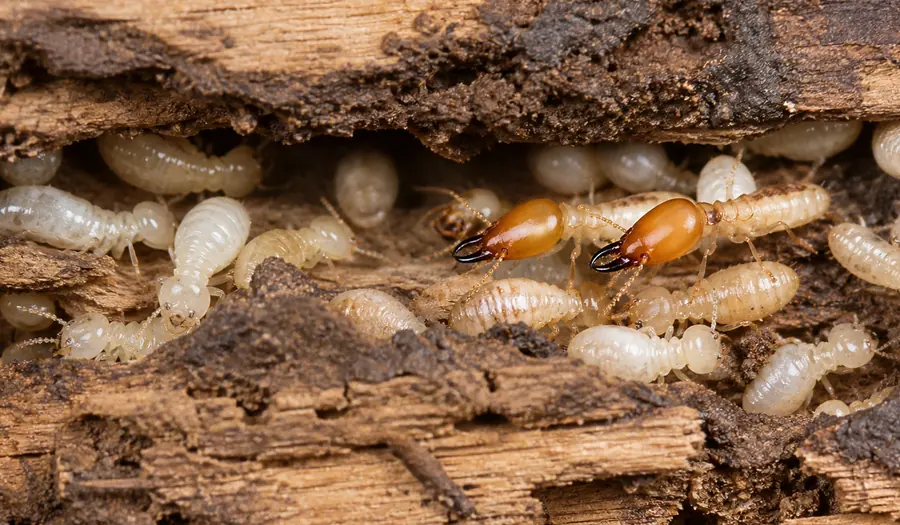
Found mud tubes or hollow timber? Our termite control Melbourne team inspects, finds the colony and treats it with baiting or a barrier. Call 0489303099.
- Finds the colony, not just the termites you can see
- Baiting, barriers and direct treatment
- Inspections from $200, quoted in writing
Get a free termite quote in two minutes
Tell us what you are seeing and where. A technician calls you back, answers your questions and books a time that suits you.
- What will it cost?Termite inspections start from $200. You get a clear written quote before any work starts.
- Do you cover my suburb?Yes, all of metropolitan Melbourne, from Werribee to Pakenham and Craigieburn to Mornington.
- Is it safe for children and pets?Licensed technicians apply every product exactly as the label directs, and tell you how long to keep kids and pets away.
- Is the work guaranteed?Every treatment comes with written warranty terms on your job record, explained before you agree.
Get a free termite quote
Two minutes. We call you back to book.
We service all of metropolitan Melbourne, for example Doncaster, Werribee, Frankston and Craigieburn.
What is your termite problem?
Pick the one that sounds like you. Each option explains the next step and links to the part of this page that covers it.
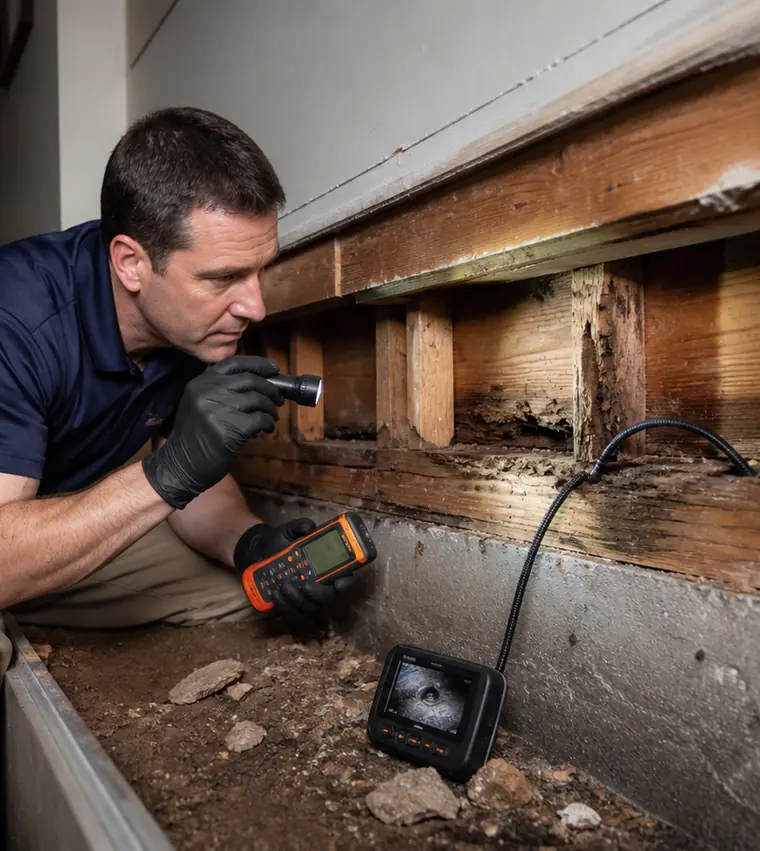
You want to know if termites are in the house
A full termite inspection checks the inside, roof void, subfloor and garden, and ends with a written report. It is the right first step whether you have seen something or just have not had a check in a year.
You can see live termites or fresh mud
Leave them exactly where they are. Termites that are disturbed retreat and come back somewhere else, which makes the colony harder to reach. Call us, send a photo through the form, and we will book the inspection that decides the treatment.
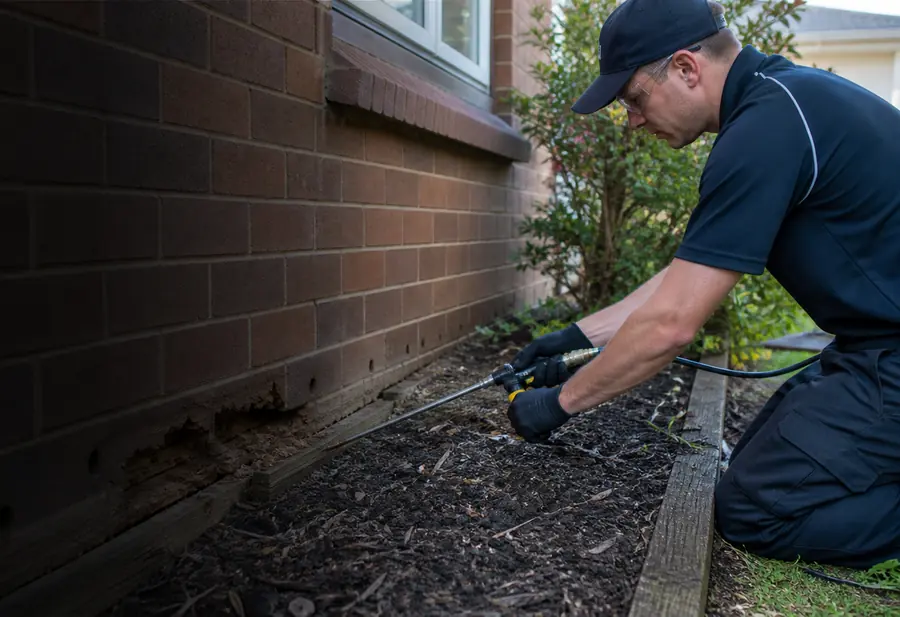
No termites yet, and you want it to stay that way
Protection is a chemical soil barrier, a set of monitored bait stations, or both, plus inspections every 12 months. Which one suits depends on the slab, the garden and how close the nearest trees and old stumps are.
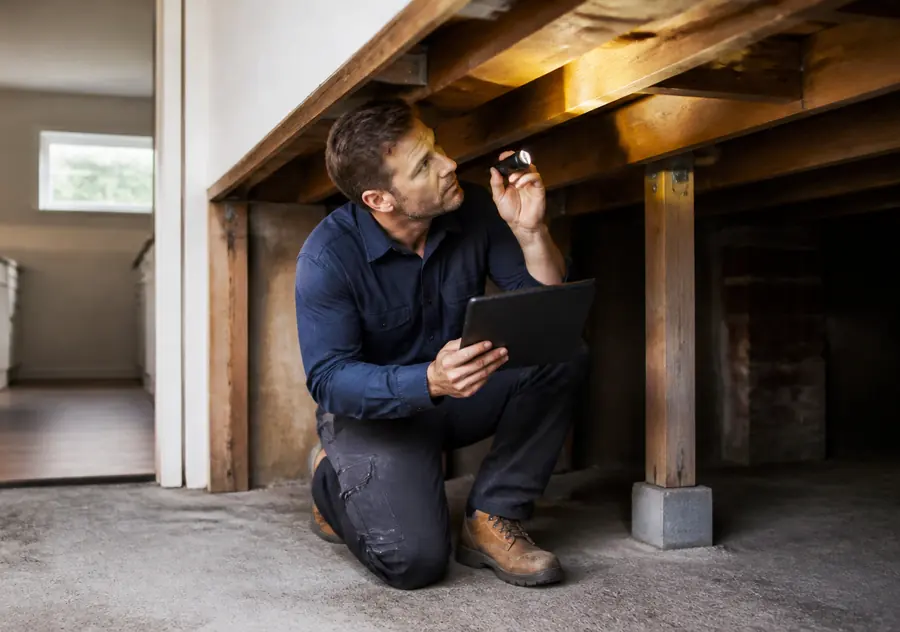
You are about to buy and want the timber checked
A pre purchase termite inspection looks for live termites, old damage and conditions that invite them, and gives you a report you can take back to the agent. This is a timber pest inspection only, not a structural or building report.
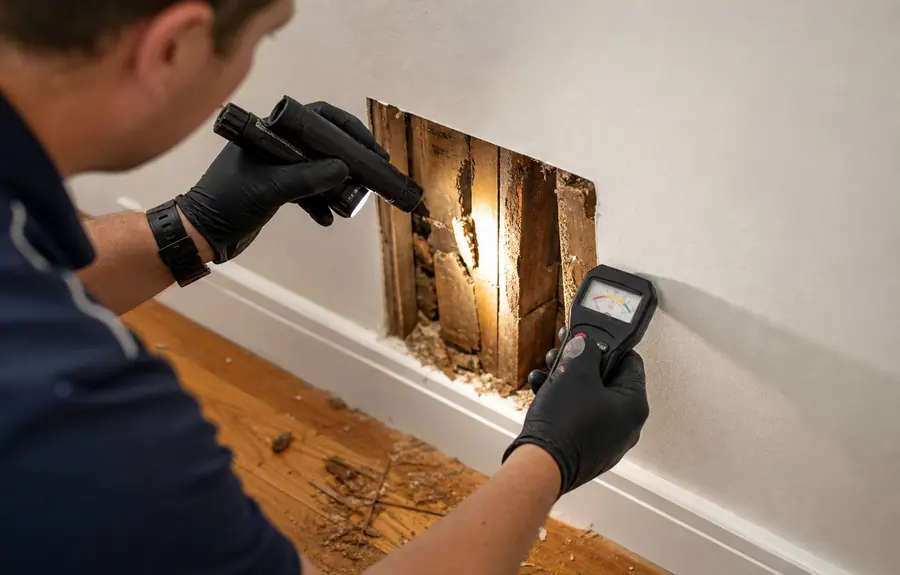
Timber is hollow, crumbling or packed with mud
Damage can be old or active, and the difference decides everything. We check whether termites are still working in the timber before anyone talks about repairs, because fixing timber over a live colony only feeds it.
How does termite control work in Melbourne?
Termite control in Melbourne works by finding where the termites are coming from and killing the colony, then stopping the next one getting in. Spraying the termites you can see does neither. Coptotermes causes more than 80 per cent of termite damage to Victorian buildings, and one colony can hold around 500,000 termites feeding at least 50 metres from the nest.
So every job starts with a termite inspection. Once we know the species, where they are feeding and how they are getting in, the fix is usually termite baiting to take out the colony, a termite barrier to protect the house, or both. A one off termite exterminator visit skips that order; as a termite specialist, it is our whole method.
Species, damage and colony figures: Victorian Department of Health guidance on termites.
Termites in Melbourne at a glance
| Main termite in Melbourne | Coptotermes, a subterranean termite |
|---|---|
| Share of building damage in Victoria | More than 80 per cent, from Coptotermes |
| Typical colony | Around 500,000 termites |
| How far they travel to feed | At least 50 metres from the nest |
| When winged termites fly | Warm, humid evenings, late spring into summer |
| How often to inspect | At least once every 12 months |
| Treatment options | Colony baiting, soil barrier, direct treatment |
| Inspection price | From $200, written quote first |
Signs of termite damage in your home
Termites eat timber from the inside and leave the surface intact, so the clues are small. If you spot any of these, book a termite inspection.
Mud tubes
Pencil thin tunnels of mud running up stumps, the slab edge, brickwork or the inside of a cupboard.
Hollow timber
Skirting boards, architraves or door frames that sound papery when tapped, or that a screwdriver pushes into.
Rippled paint
Paint that bubbles, blisters or looks water damaged on a dry wall, often in a thin line.
Sticking doors
Doors and windows that suddenly jam, because termites carry moisture into the timber around them.
Mud in joints
Soil packed into cracks, gaps in plaster, electrical outlets or the joins between timber and brick.
Winged termites
Swarms around lights on a warm, still evening, or piles of dropped wings on window sills.
Sagging floors
A soft spot in a floorboard, a dipping ceiling or a lintel that has started to crack.
Damp that will not dry
A wet patch near the house, a leaking tap or a blocked downpipe that stays wet for weeks.
What happens at a termite inspection
A proper termite inspection in Melbourne covers far more than the rooms you live in. We work through the inside of the house, the roof void, the subfloor where there is access, the slab edge and weep holes, then out into the garden to trees, stumps, sleepers, fences and retaining walls.
We look for live termites, old termite damage, mud tubes and the conditions that attract them, such as leaks, poor drainage and soil against the brickwork. Then you get a written report with photos, and a clear recommendation you can act on or simply keep on file.
- Inside every room
- Roof void
- Subfloor and stumps
- Slab edge and weep holes
- Trees, stumps and fences
- Moisture and drainage
Buying a home? A pre purchase termite inspection uses the same checklist before you sign.
The termites Melbourne homes actually get
White ants is the everyday name, but the species decides the treatment. These are the five found in Victoria and how each one is handled.
Coptotermes
Coptotermes acinaciformis and Coptotermes frenchi
- Where
- Every part of Melbourne. Nests in eucalypts, old stumps, under slabs and inside wall cavities.
- What it does
- The termite behind more than 80 per cent of building damage in Victoria, in colonies of around 500,000 that forage at least 50 metres.
- How it is treated
- C. acinaciformis takes bait well. C. frenchi takes it less readily, so a soil barrier or direct treatment is often part of the plan.
Dampwood termite
Porotermes adamsoni
- Where
- Wet hills and gullies, and the drier foothills on the edge of Melbourne.
- What it does
- The largest termite in Victoria. Lives in damp or rotting timber and does not build mud tubes.
- How it is treated
- Usually solved by removing the wet timber and fixing the leak that made it wet.
Mound building termite
Nasutitermes exitiosus
- Where
- Mostly north of the Great Dividing Range, in mounds up to a metre across.
- What it does
- Rarely a house problem around Melbourne. Goes for sleepers, garden edging and fence posts.
- How it is treated
- Treated at the mound or inside the timber it is eating.
Schedorhinotermes
Schedorhinotermes species
- Where
- Northern Victoria more than Melbourne.
- What it does
- Destructive and on the move, with two sizes of soldier.
- How it is treated
- Needs a positive ID first, because it behaves differently from Coptotermes.
Heterotermes
Heterotermes ferox
- Where
- Present in Victoria, rarely a serious pest here.
- What it does
- Paling fences, posts and timber floors, close to the ground.
- How it is treated
- Usually a spot treatment of the affected timber.
Source: Victorian Department of Health guidance on termites.
Termite treatment options: baiting, barrier or direct
These are three different tools for three different jobs. After the inspection we recommend the one that fits your home, and explain why.
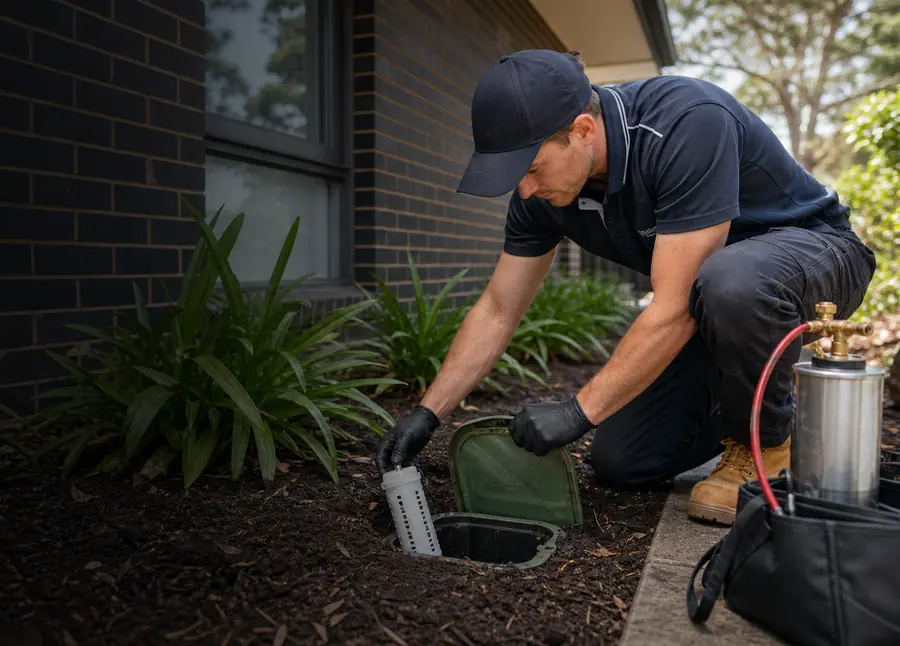
Colony baiting
Best when termites are active and the nest cannot be found
- Bait stations placed on live workings and around the home
- Workers carry a slow acting growth regulator back to the nest
- The colony dies over the following weeks to months
- Stations are checked and topped up until activity stops
Termite barrier
Best for keeping the next colony out of the house
- A registered termiticide applied to the soil around the footings
- Trenching along garden edges, drilling through paths and slab edges
- Creates a treated zone that termites cannot cross unseen
- Product, depth and zone written on your certificate
Direct treatment
Best for live termites found in one place
- Dust or foam applied straight into active workings
- Reaches the termites that are feeding in walls and frames
- Often the first step before baiting or a barrier
- Followed up to confirm the activity has stopped
| Termite treatment | Colony baiting | Termite barrier | Direct treatment |
|---|---|---|---|
| What it targets | The whole colony, wherever the nest is | Termites coming in from the soil | The termites in that timber |
| How long it takes | Weeks to months until the colony is gone | Usually one visit or a few days, depending on the home | The same visit |
| Disruption | Low: stations sit quietly in the garden | Some trenching and drilling around the house | Very low |
| After the job | Stations checked until activity stops | Inspections at least every 12 months | Follow up to confirm, then protect |
Found termites? Do not spray or disturb them.
Breaking open the mud or spraying the workings sends the colony somewhere else in the house. Leave it, take a photo, and call us. Undisturbed termites give a bait the best chance of reaching the nest.
Termite pest control in four steps
Our termite pest control Melbourne service follows the same four steps on every job, so you always know what comes next.
Call or send the form
Tell us what you have seen. A photo helps. We book a time that suits you, 7 days a week.
Inspection and ID
We check the house, roof void, subfloor and garden, and identify the species if termites are present.
Report and written quote
You get photos, findings and the options that fit your home, with the price in writing.
Treatment and checks
We treat, then come back to check stations or confirm activity has stopped.
Termite inspection cost and treatment cost
Clear starting prices, so you know where you stand before you call. Your exact price depends on your home, and you get it in writing before any work starts.
Termite inspection
Whole property, written report with photos
Starting fromFinal price confirmed in writing
Colony baiting
Stations, bait and follow up checks until activity stops
Starting fromFinal price confirmed in writing
Termite barrier
Soil barrier around the home, with certificate
Starting fromFinal price confirmed in writing
Pre purchase inspection
Timber pest inspection before you buy
Starting fromFinal price confirmed in writing
What sets your final termite treatment cost
- Size and layout. A single level brick veneer takes less time than a large two storey home with extensions.
- Slab or subfloor. Raised floors with good access are quicker to inspect and treat than slabs with tiled patios over the edge.
- Active or not. Live termites mean baiting or direct treatment first, then protection.
- Perimeter length. A barrier is priced on how much soil and slab edge has to be treated.
- Follow up visits. Baiting includes return checks, and the number depends on how fast the colony takes the bait.
- Access. Low subfloors, full roof voids and concrete that has to be drilled add time.
Is termite treatment safe, and is it covered?
These are the two things people ask before they book. Here are straight answers.
Children and pets
Every termiticide and bait is applied by a licensed technician, exactly as its label directs.
We tell you how long to keep children and pets off treated areas, usually until the soil has dried, and bait sits inside locked stations in the garden.
Warranty in writing
Termite treatments come with written warranty terms on your job record.
The terms depend on the treatment and on keeping up regular inspections. We explain them before you agree to anything, so there is no fine print later.
Six ways to make your home less attractive to termites
Nothing stops termites for good, but these steps remove the moisture, food and hidden entry points they look for. Pair them with a check every 12 months, and ask whether a termite barrier Melbourne homes like yours can have installed around the footings makes sense.
Fix leaks and drainage
Termites follow moisture. Repair dripping taps, overflowing gutters and downpipes that empty against the wall.
Keep garden beds low
Soil and mulch piled over the slab edge or weep holes gives termites a hidden way in.
Lift timber off the soil
Sleepers, stumps, firewood and old formwork touching the ground are food and a bridge.
Keep vents clear
A dry, well aired subfloor is far less attractive than a damp, closed one.
Leave the slab edge visible
A clear strip lets you and us spot mud tubes before they reach the frame.
Inspect every 12 months
Most damage is found late. A yearly check finds activity while repairs are still small.
Termite control across Melbourne
Termite inspection, treatment and termite removal Melbourne wide, 7 days a week. These are just some of the suburbs we visit most.
Do you service my suburb?
Searching for termite control near me or termite treatment near me? Type your suburb or postcode, or tap any suburb and we fill it into the form for you.
North
West
East
South East
Bayside and South
Inner Melbourne
Termite control questions, answered
Cost, safety, insurance, warranties and what happens on the day. Still unsure? Ask us directly.
How much does a termite inspection cost in Melbourne?
A standard termite inspection starts from $200, and a pre purchase termite inspection from $250. The termite inspection cost goes up with the size of the home, whether it sits on a slab or stumps, and how much of the roof void and subfloor can be reached. We confirm the price before you book.
How much does termite treatment cost?
Colony baiting starts from $1,400 and a termite barrier from $1,500. Your termite treatment cost depends on whether termites are active, which treatment suits the house, and how much ground a barrier has to cover. We inspect first, then quote in writing, and nothing starts until you approve it.
What does a termite inspection include?
We check inside every room, the roof void, the subfloor where there is access, the slab edge and the garden, including trees, stumps, fences and retaining walls. You get a written report with photos showing any live termites, old damage and the conditions that make your home attractive to them.
How often should I get a termite inspection?
At least once every 12 months for most Melbourne homes, and more often if the house has had termites before, backs onto bush or has old stumps in the yard. Most damage is found when a tradesperson opens a wall, so a yearly check is the cheapest protection you can buy against it.
Are white ants the same as termites?
Yes. White ants is the old Australian name for termites. They are not ants at all; they are closer to cockroaches. White ant treatment and termite treatment are the same job, and the method depends on the species we find.
Should I spray the termites myself?
No. Surface sprays kill the few termites you can see and send the rest of the colony somewhere else in the house, which makes the job slower and dearer. Leave the workings untouched, take a photo, and call us. Undisturbed termites are the best chance a bait has of reaching the nest.
Which is better, baiting or a termite barrier?
They do different jobs. Baiting removes a colony that is already feeding. A termite barrier stops the next colony getting in from the soil. Many Melbourne homes need baiting first and a barrier after, and some only need one. We tell you which, and why, after the inspection.
How long does termite baiting take to work?
Usually weeks to a few months. Workers have to find the bait, feed on it and carry it back so it spreads through the colony. We check the stations on a schedule and keep going until the activity stops, then talk about protecting the house from here.
Is termite treatment safe for my children and pets?
Every product is applied by a licensed technician, exactly as its label directs. We tell you how long to keep children and pets away from treated areas, usually until the soil or surface has dried, and bait sits inside locked stations.
Do you do pre purchase termite inspections?
Yes, from $250. A pre purchase termite inspection checks for live termites, previous damage and high risk conditions before you commit to the property. It is a timber pest inspection only. If you also need a structural report, book a building inspector separately.
Does home insurance cover termite damage?
Most Australian home insurance policies exclude termite damage, so the repair bill usually sits with the owner. Check your own product disclosure statement, and treat regular inspections as the protection you actually control.
Is there a termite inspection near me in my suburb?
We cover the whole metropolitan area, from Werribee to Pakenham and Craigieburn to Mornington. Type your suburb in the service area checker on this page, or put it in the form, and we will confirm when we call.
Do you give a warranty on termite treatment?
Yes. Treatments come with written warranty terms on your job record. The terms depend on the treatment used and on keeping up regular inspections, and we explain them before you agree to anything.
Termites at your place? Let us sort it.
Tell us what you are seeing. We call back, explain the options and quote in writing before any work starts.